

Key takeaways:
- Four families of firewood suppliers coexist in France: local producers, energy distributors, online specialists (such as Simplyfeu, which covers all of France with firewood, pellets and compressed logs) and DIY superstores.
- Local producers are 10 to 30 percent cheaper per stere but limited to a 50 to 80 km delivery radius.
- Four resources help find a supplier near you: the France Bois Bûche directory, chambers of agriculture, Google Business Profile and word of mouth through stove installers.
- Annual contracts with automatic delivery are relevant for regular pellet consumption, with locked-in prices and priority delivery in winter.
A fragmented market across 4 types of suppliers
The French firewood market is not held by a handful of retailers. Several thousand players share the distribution: forest operators, sawmills, energy distributors, e-commerce specialists, DIY superstores. Choosing a firewood supplier depends less on an absolute hierarchy than on the match between the buyer’s profile (volume, frequency, region, fuel type) and the supplier’s logistics structure.
This article covers the four families of players, the methods to identify a nearby supplier, the verification tools available and the modalities of long-term commitment. The quality criteria for the fuel itself (moisture content, species, certifications) are detailed in the article best firewood seller.
The 4 types of firewood suppliers
Each supplier type reflects a different economic and logistics logic. Identifying the right category avoids comparing offers that are not designed for the same use.
1. Local producers and sawmills
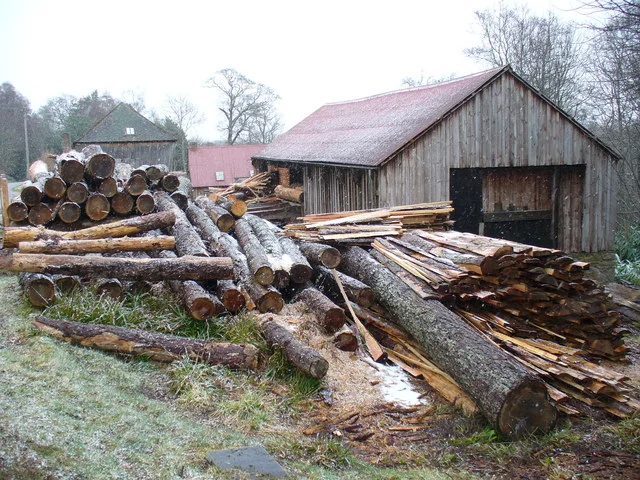
Forest operators, loggers and sawmills are the first link in the chain. They sell directly the wood they produce, generally within a 50 to 80 km radius around the production site.
- Profile: small or medium structure, sometimes family-run, often certified France Bois Bûche or PEFC
- Minimum volume: often 2 to 3 steres, sometimes negotiable
- Delivery: tipper or flatbed truck, drop at the gate or entrance
- Price: 10 to 30 percent cheaper than a national retailer on large volumes
- Lead time: fast in summer and autumn, longer in winter
Strength: full traceability, human contact with the producer, flexibility on drying and sizing. Limit: restricted geographic area, low online visibility for some operators.
2. Energy distributors and regional players
This family gathers former oil distributors who switched to wood energy and regional players specialised in fuels. TotalEnergies Proxi-Chauffage is the best-known national network, Combustibles Gruchy covers Normandy and Hauts-de-France, several similar players exist in Grand Est, Auvergne-Rhône-Alpes or Nouvelle-Aquitaine.
- Profile: industrial structure with a significant logistics fleet
- Volume: suitable for both small and large orders
- Delivery: tanker truck for bulk pellets, flatbed for logs and pallets
- Price: between local producers and online retailers
- Services: annual contracts, automatic delivery, payment plans
Strength: professional logistics, guaranteed delivery capacity even in peak heating season.
3. Online specialists
Wood energy pure players emerged in the 2010s and have established themselves on pellets and compressed logs. They generally cover the whole of metropolitan France with standardised pallets.
- Simplyfeu: nationwide delivery, catalogue of firewood (several drying levels), pellets and compressed logs, SimplyMixtes offer combining logs and compressed logs on the same pallet
- Crépito: focused on pellets and compressed logs
- Bois de Chauffage.net: multi-species and multi-packaging catalogue
- Bois-Bûche.com: log specialist, kiln-dried or naturally seasoned
Strength: easy comparison, visible customer reviews, transparent delivery, broad catalogue.
4. DIY superstores
Leroy Merlin, Castorama, Brico Dépôt and Mr. Bricolage sell firewood, pellets and compressed logs in store and online.
- Profile: generalist mass retail, seasonal aisle
- Volume: suited to small quantities (bag, 30 to 50 kg net, single pallet)
- Delivery: in-store pickup across a dense network of stores close to home
- Price: competitive on small volumes
Strength: immediate availability in store, practical for an occasional purchase or top-up.
Comparison table of the 4 supplier types
| Criterion | Local producer | Distributor | Online specialist | DIY superstore |
|---|---|---|---|---|
| Coverage area | 50 to 80 km | Regional or national | Nationwide | Local (store) |
| Minimum volume | 2 to 3 steres | 1 stere or 1 pallet | 1 pallet | 1 net or 1 bag |
| Price on large volume | Lowest | Intermediate | Transparent online pricing | Competitive on small volumes |
| Annual contract | Rare | Common | Sometimes | No |
How to find a supplier near you
Identifying a reliable local producer takes some research. Four complementary resources go faster than a plain web search.
The France Bois Bûche directory
France Bois Bûche is the collective mark carried by the French wood industry. Its online directory filters certified producers by county. The certification commits members to French wood origin, respected announced volume, moisture content and commercial presentation.
Chambers of agriculture
County chambers of agriculture regularly publish lists of active producers and sawmills in their territory. These lists are particularly useful in rural areas where some producers have no website. A phone enquiry to the forest-wood service of the chamber often gives access to an up-to-date census.
Google Business Profile and review platforms
The most active producers maintain a Google Business Profile with photos, opening hours and customer reviews. A search like “firewood + county name” on Google Maps identifies local players and provides recent customer feedback.
Trustpilot is less used for producers but common for online specialists and national distributors. A rating above 4 out of 5 based on 100+ recent reviews is a good signal.
Word of mouth through installers
Installers of wood stoves, inserts and boilers generally know the suppliers in their sector well. They cross-check fuels daily and quickly identify reliable producers versus those who damage installations with overly wet wood. A simple question to one’s installer during an annual maintenance visit can save considerable time.
Which supplier for which buyer profile
The same offer does not carry the same value depending on the profile. Here are the most relevant matches.
The occasional consumer (one to three steres per year)
Backup heating, leisure fireplace, small log stove in a secondary residence. Low annual volume, infrequent purchase.
- Main option: DIY superstore for a top-up or occasional need
- Alternative: online specialist for a single pallet with scheduled delivery
- To avoid: annual distributor contracts, unsuited to such low volumes
The regular consumer (5 to 10 steres per year)
Primary heating or regular additional heating. Need for a reliable supplier with a stable supply.
- Main option: certified local producer, annual order in spring to anticipate the season
- Alternative: regional distributor with staggered delivery
The large consumer (over 10 steres per year or several tonnes of pellets)
Full primary heating, large poorly insulated home, gîte or small professional activity.
- Main option: local producer in grouped order, price negotiation per stere on the volume
- Alternative: annual contract with an energy distributor for pellets
The urban profile without storage
Apartment with stove or insert, low storage capacity, no vehicle suited to large volumes.
- Main option: compressed logs in bags or pellets in bags via online specialist or DIY superstore
- Alternative: fractional small pallets from an online specialist with delivery at the building entrance
Online tools to compare and verify
Beyond the France Bois Bûche directory, several tools help verify a supplier before placing an order.
“Wood energy represents nearly 35 percent of renewable energy consumption in France. The industry counted over 1000 producers certified France Bois Bûche in 2023, for a market estimated at around 5 billion euros annually including all wood fuels.” — France Bois Forêt, Industry Observatory, 2023
Checks to run before ordering:
- Read the last 20 reviews on Google and Trustpilot, especially negative ones to identify recurring issues (delivery, volume, moisture)
- Verify the mention of verifiable certifications on the product sheet or invoice
- Request a technical sheet specifying species, measured moisture content and actual volume
- Start with a test order in reduced volume before a larger commitment
Annual contracts and recurring deliveries
For regular consumption, signing an annual contract with a supplier offers several advantages and a few limits worth knowing before committing.
Annual contract benefits
- Locked-in price for the season, protection against market rises (useful when wood prices spike, as in 2022-2023)
- Priority delivery during peak heating season, when stocks tighten among non-contracted competitors
- Automatic scheduling: one or two planned deliveries during the year, no follow-up needed
Limits to know
- Volume commitment: the customer commits to an annual quantity to consume or store
- Less comparison: impossible to play competition during the contract term
- Less aggressive pricing sometimes at contract start, to offset the year-long price guarantee
This type of contract is most relevant for pellets as primary heating, with predictable annual consumption (between 1 and 3 tonnes for a 100 to 150 m² home). It is less suited to logs, whose consumption varies more strongly by winter.
Going further
The choice of supplier is inseparable from the choice of fuel itself. The article best firewood seller details the quality criteria (moisture, species, certifications) to check before ordering. Complete analyses on firewood, pellets and compressed logs are gathered in the Heating category. Good home thermal insulation remains the first lever to reduce annual consumption, whatever the quality of the fuel delivered.
Frequently asked questions
Who is the best firewood seller?
The best supplier depends on the buyer profile. For occasional use and small volumes (one to three steres per year), DIY superstores or online retailers such as Simplyfeu, Crépito or Bois de Chauffage.net offer good flexibility. For regular use or large volumes (over 10 steres), local producers certified France Bois Bûche offer a better price to quality ratio. For pellet deliveries on pallets, energy distributors such as TotalEnergies Proxi-Chauffage offer attractive annual contracts. In all cases, check recent reviews, certifications and delivered price transparency.
Where can I find a firewood supplier near me?
Four resources help locate a nearby supplier. The France Bois Bûche directory lists certified producers by county. Chambers of agriculture often publish lists of local forest operators. Google Business Profile and Trustpilot give access to geolocated customer reviews. Local word of mouth, particularly through wood stove and fireplace installers, remains a reliable source to identify serious producers in your area.
Local producer or online retailer: which supplier should I choose?
The local producer offers a better price to quality ratio on large volumes (over 10 steres), strong traceability and a human contact, but requires being within their delivery radius (usually 50 to 80 km). The online retailer is better suited to standardised orders, remote deliveries or purchases of pellets and compressed logs. An urban profile without a suitable vehicle and with limited storage will benefit more from an online specialist. A rural profile with regular consumption will benefit more from a local producer.
How to check a firewood supplier's reliability?
Four checks help assess reliability. Review Google and Trustpilot ratings over the last 12 months (at least 50 recent reviews, average rating above 4 out of 5). Verify displayed certifications (NF Bois de Chauffage, France Bois Bûche, DINplus for pellets). Request a detailed invoice mentioning species, moisture content, volume and delivery fees. Start with a small test order before a larger commitment.
Can I sign an annual contract with a firewood supplier?
Yes, annual contracts exist mainly for wood pellets. Energy distributors (TotalEnergies Proxi-Chauffage, Combustibles Gruchy, regional distributors) offer automatic delivery plans with locked-in prices for the season. Advantages: price protected against market rises, priority delivery during winter peak periods. This type of contract is most relevant for pellet-based primary heating with a predictable consumption.