

Indoor plants bring life, colour and real well-being benefits to any living space — provided you choose species suited to your lifestyle. For people who are short on time or new to gardening, certain easy-care indoor plants forgive forgotten waterings, tolerate low light and require no daily attention. This guide covers the 10 best species, a comparison table and the most common mistakes to avoid to keep your plants healthy long-term.
Why some indoor plants are easier than others
A plant’s ease of care depends directly on its natural environment. Species native to challenging habitats — tropical forests with low light, arid zones, dense undergrowth — have developed remarkable adaptation mechanisms: water storage in leaves or rhizomes, photosynthesis at low light intensity, dormancy during drought.
These same adaptations make them perfectly tolerant of imperfect apartment conditions: variable light, irregular watering, dry air in winter from heating. Choosing the right species is the first step to keeping your plants alive and thriving.
The 10 easiest indoor plants to care for
Pothos (Epipremnum aureum)
Pothos is ideal for beginners. Its heart-shaped leaves, often variegated green and yellow, work well trailing from a shelf, hanging from the ceiling or climbing a moss pole. It tolerates forgotten waterings for up to 3 weeks and adapts to any light level, including low-light rooms. Water when the soil is dry 2 to 3 cm below the surface. Note: toxic to cats and dogs if ingested.
Sansevieria (snake plant)
Sansevieria is nearly indestructible. Its thick, upright blade-like leaves store water, allowing it to survive without watering for several weeks. It adapts to all light conditions, including low-light rooms. Its vertical shape makes it ideal for narrow entrances or corners. In winter, monthly watering is more than enough.
ZZ plant (Zamioculcas zamiifolia)
The ZZ plant is perfect for hallways without windows or north-facing offices. Its underground rhizomes store water like bulbs, enabling it to endure long dry spells. Its dark green, glossy leaves remain decorative year-round, even with minimal care. Water every 2 to 3 weeks during the growing season, once a month in winter.
Aloe vera
Aloe vera combines multiple benefits: decorative plant, medicinal use (soothing gel for minor burns) and near-autonomy. It needs direct light (south-facing windowsill) but only requires watering every 15 to 20 days. Excess water is its only real threat. Use a draining substrate (cactus compost mixed with coarse sand).
Schefflera arboricola
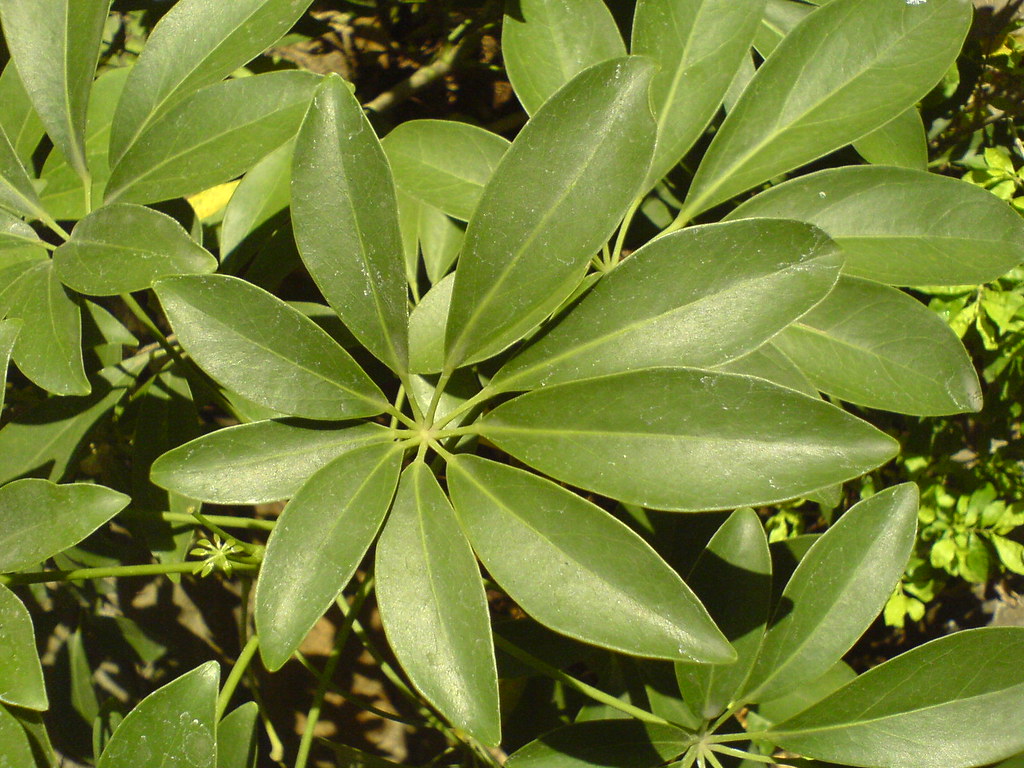
Schefflera, with its palmate leaves arranged in umbels, brings a tropical touch without fussiness. It tolerates indirect light, spaced waterings and moderate temperature variations. Its slow growth means repotting is rarely needed. It can reach 1.5 m indoors without regular pruning.
Cacti and succulents
Champions of autonomy, cacti and succulents thrive on minimal water thanks to their CAM metabolism. Monthly watering is enough outside the growing period. Their only requirement: plenty of direct light. Place them on a south-facing windowsill or under a grow light. Perfect for sunny window ledges.
Spathiphyllum (peace lily)
Spathiphyllum is one of the few plants that blooms in low-light conditions. Its white spadix flowers appear one to two times a year. It appreciates ambient humidity — mist the leaves in summer. Water when the soil is dry 1 to 2 cm below the surface. It appears on NASA’s list of plants that absorb volatile organic compounds.
Ficus lyrata
The Ficus lyrata has become a design classic for its large violin-shaped leaves. It prefers bright indirect light and stable temperatures. Avoid draughts and frequent moves, as it may drop leaves when its environment changes, then stabilise. Water when the soil is dry 2 to 3 cm below the surface.
Dracaena marginata
Dracaena marginata, with its slender stems and ribbon-like leaves with burgundy edges, resembles a miniature palm tree. It tolerates low-light rooms and irregular waterings. Water only when the soil is thoroughly dry. Its slow growth makes it a low-maintenance companion for spaces where you don’t want to repot every year.
Chlorophytum (spider plant)
Chlorophytum comosum is one of the few plants that is non-toxic to cats. Its arching green-and-white leaves trail elegantly from hanging planters. It naturally produces stolons (hanging baby plants) that can easily be repotted to multiply the plant for free. It adapts to any light level and needs watering only every 10 to 14 days.
Comparison table: care requirements by species
| Plant | Watering frequency | Light needed | Tolerates shade | Toxic to pets |
|---|---|---|---|---|
| Pothos | Every 2-3 weeks | Low to bright | Yes | Yes |
| Sansevieria | Every 3-4 weeks | Low to bright | Yes | Yes |
| ZZ plant | Every 2-3 weeks | Low | Yes | Yes |
| Aloe vera | Every 2-3 weeks | Strong (direct) | No | No |
| Schefflera | Every 10-14 days | Indirect | Partial | No |
| Cacti | Monthly | Strong (direct) | No | No |
| Spathiphyllum | Every 7-10 days | Low to moderate | Yes | Yes |
| Ficus lyrata | Every 10-14 days | Bright indirect | No | No |
| Dracaena | Every 2-3 weeks | Low to moderate | Yes | Yes |
| Chlorophytum | Every 10-14 days | Low to bright | Yes | No |
Which plants work in a room with no natural light
Hallways, bathrooms without windows or north-facing offices pose a real challenge for plants. The viable species in these conditions are limited but real: Sansevieria, ZZ plant, Dracaena marginata and Spathiphyllum can all photosynthesise with very low lux levels.
To avoid in dark rooms: succulents, cacti, Aloe vera and Ficus lyrata, which deteriorate quickly from lack of light (etiolation, colour loss, gradual decline).
A grow light with a full spectrum (12 hours per day) can expand your options without fully replacing natural light, though it does represent an additional investment.
The most common mistakes with indoor plants
Overwatering is the leading cause of indoor plant deaths. Root rot sets in before the leaves show visible signs. Simple rule: push your finger 2 cm into the soil. If it is still moist, do not water.
Pot without drainage holes: decorative pots without holes accumulate water at the bottom and suffocate the roots. Use a decorative outer pot with a draining inner pot.
Wrong exposure: placing a succulent in a dark hallway or a Ficus lyrata under an air conditioning vent will quickly kill the plant. Always check light requirements before choosing a location.
Repotting too often or too late: repotting every 2 to 3 years is appropriate for most species. Repotting into an oversized pot stresses the plant and promotes root rot from excess damp substrate.
For those wanting to take plants outdoors in summer, pots can move to a terrace or balcony. Find ideas for designing an outdoor terrace with potted plants and weather-resistant furniture.
Combining indoor plants with interior décor
Houseplants play a growing role in contemporary interior design. Combined with natural textiles (linen, wool, rattan) and raw materials (wood, stone, terracotta), they reinforce organic and calming atmospheres. Cocooning decor trends consistently integrate plants as a structural element, alongside furniture and rugs.
In small spaces, favour vertical plants — Dracaena, Sansevieria, Ficus lyrata — that grow upward without taking up floor space. One or two medium-sized plants are enough to bring greenery into a room without cluttering it.
For those whose interest in plants extends beyond decoration, moving to a kitchen garden is a natural next step. A beginner’s guide to creating a vegetable garden as a beginner covers the first accessible crops, including on a balcony or terrace.
Frequently asked questions
Which indoor plant is the easiest to care for?
The Pothos (Epipremnum aureum) is universally considered the easiest indoor plant. It tolerates forgotten waterings, adapts to all light conditions (including low light) and grows quickly. Perfect for absolute beginners.
How often should you water an indoor plant?
Watering frequency varies by species. As a general rule, water when the soil is dry 2 to 3 cm below the surface. In winter, halve the frequency. Succulents and cacti need watering only once a month. The sign of overwatering: leaves turn yellow and fall.
Which indoor plants can survive in a room with no sunlight?
Several species thrive without direct light: Sansevieria, ZZ plant (Zamioculcas), Spathiphyllum (peace lily) and Dracaena marginata tolerate dark rooms or north-facing spaces. To avoid in these conditions: succulents and cacti.
Do indoor plants really purify the air?
Several studies, including NASA’s, have shown that certain species absorb volatile organic compounds (VOCs). Among the most effective: Spathiphyllum, Pothos, Dracaena and Aloe vera. For a measurable effect, count at least 1 plant per 10 m2.
Which indoor plant is safe for cats?
Chlorophytum (spider plant), Calathea, Spathiphyllum and Phalaenopsis orchid are safe for cats. However, Sansevieria, Pothos and Dracaena are toxic if ingested. Always check the ASPCA list before buying a plant.